After a flood, a burst pipe, or a major water leak, one of the first questions homeowners ask is: how long is this going to take? The honest answer is that drying timelines vary significantly depending on a range of factors, such as the size of the affected area, how long the water sat, what materials it reached, and how quickly professional equipment was brought in.
What is consistent across every water damage situation is this: the faster the drying process begins, the shorter and less costly the overall restoration. At Cleanup & Total Restoration (CTR), our Boise team responds to water damage emergencies 24/7 and arrives on-site within 60 minutes, because when it comes to flood damage restoration, every hour matters.
Table of Contents
How Long Does It Take to Dry Out a House?
There is no single answer, but here is a general framework based on the severity of the damage:
- Minor water damage (a small spill, a single room lightly affected, caught quickly): Drying can typically be completed within one to two days with the right equipment in place.
- Moderate water damage (a burst pipe, flooded kitchen or bathroom, water that reached drywall or flooring): Expect several days to a week or more, depending on the materials involved.
- Severe water damage (flooded basement, multi-room flooding, water that sat for an extended period, or structural penetration): Complete drying can take one to several weeks, particularly when walls, insulation, and subfloor materials need to be addressed.
These are general guidelines, not guarantees. The only way to know where your specific situation falls on this spectrum is through a professional moisture assessment. CTR provides free on-site inspections, so you have an accurate picture from the start.
What Equipment Is Used to Dry Out a Water-Damaged Home?
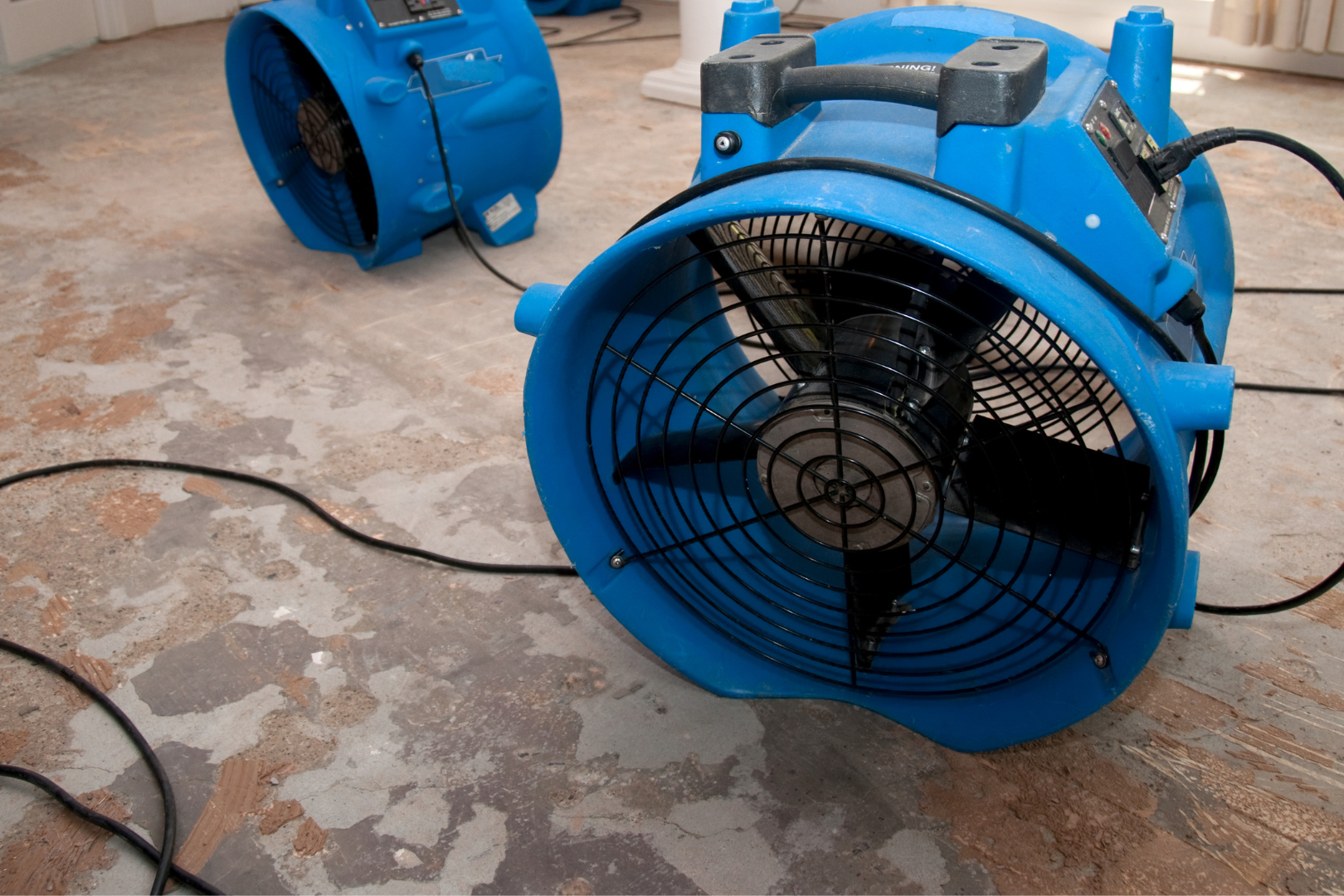
Professional water damage restoration is not the same as pointing a box fan at a wet floor. Restoration companies use commercial-grade equipment specifically engineered to remove moisture from materials at a structural level, not just from the surface.
Air Movers
Air movers are high-velocity fans designed to create consistent airflow across wet surfaces. They accelerate evaporation by moving moist air away from saturated materials and replacing it with drier air. Professional air movers are significantly more powerful than household fans and are strategically positioned to maximize drying efficiency across floors, walls, and ceilings.
Commercial Dehumidifiers
While air movers pull moisture from surfaces, dehumidifiers extract it from the air before it can reabsorb into materials elsewhere in the room. Industrial-grade dehumidifiers operate at a capacity far beyond that of consumer units. In most professional drying setups, air movers and dehumidifiers work together as a system.
Drying
Moisture Detection Equipment
Drying is not complete just because surfaces appear or feel dry. Moisture meters and thermal imaging cameras allow technicians to detect hidden moisture inside walls, beneath flooring, and in subfloor materials, areas that cannot be assessed solely by touch or visual inspection. Without this equipment, moisture can be left behind unknowingly, creating ideal conditions for mold growth in the weeks that follow.
Truck-Mounted and Portable Extraction Units
Before drying equipment is deployed, standing water must be removed. Professional extraction units, both truck-mounted and portable, remove water far more efficiently than wet-dry vacuums. Rapid extraction is the critical first step that enables all subsequent drying to be faster and more effective.
Desiccant Dehumidifiers
In situations involving dense building materials, crawl spaces, or areas with very low temperatures (such as basements during Idaho winters), desiccant dehumidifiers may be used. These units use a chemical process to absorb moisture from the air and are effective in conditions where standard refrigerant-based dehumidifiers are less efficient.
What Factors Affect the Drying Timeline After Flooding?
Understanding what drives the drying timeline can help homeowners set realistic expectations and make smart decisions quickly.
How Long the Water Sat Before Extraction Began
This is the single most important variable. Water begins penetrating flooring, wall cavities, insulation, and structural materials within hours of initial contact. The longer it sits, the deeper it goes, and the longer it takes to extract. Acting within the first few hours of a water event can dramatically reduce both drying time and the scope of restoration.
The Size and Layout of the Affected Area
A single bathroom affected by an overflowing toilet is a very different job than a flooded basement covering several hundred square feet. Larger areas require more equipment, longer drying periods, and more frequent moisture monitoring throughout the process.
The Category of Water
Clean water from a broken supply line is easier and faster to remediate than gray water from an appliance overflow or black water from a sewage backup. Contaminated water categories require additional disinfection protocols beyond drying, which extends the overall timeline.
The Materials Involved
Different building materials absorb and release moisture at very different rates. Drywall, for example, saturates quickly and must often be removed to allow the wall cavity and framing to dry properly. Hardwood flooring can sometimes be saved with a rapid response, but it may take an extended period to fully dry. Concrete, masonry, and dense insulation materials are among the slowest to dry and may require specialty equipment or extended drying cycles.
Indoor Temperature and Humidity
Drying is a function of evaporation, and evaporation is influenced by temperature and humidity. Cold temperatures and high indoor humidity significantly slow the drying process. This is particularly relevant in Boise during the winter months, when temperatures can drop considerably, and homes may have less natural airflow. Professional drying equipment is designed to operate effectively regardless of outdoor conditions, but ambient conditions still influence overall timelines.
Whether Materials Need to Be Removed
In many moderate to severe water damage situations, saturated drywall, insulation, carpet, or flooring must be removed before the structure behind them can be effectively dried. While this may seem like a setback, removing compromised materials actually accelerates the overall drying process and prevents mold from developing behind surfaces.
When Is Emergency Water Extraction Necessary in Boise?
Emergency water extraction is appropriate any time standing water is present or when significant water intrusion has occurred and cannot be adequately addressed with household tools. Specific situations where immediate professional extraction is necessary include:
- Flooded basements: standing water in a basement creates immediate structural, electrical, and mold risk
- Burst or frozen pipes: particularly common in Boise’s cold winters; can release large volumes of water very quickly
- Sewage backups: black water situations require immediate professional intervention for both safety and health reasons
- Storm or flood damage: water entering from outside the home carries contamination and must be treated as a Category 3 event
- Appliance failures: dishwashers, washing machines, and water heaters that fail can release significant water into the flooring and walls
- Any situation where water has been sitting for more than a few hours: the risk of mold development begins within 24 to 48 hours; do not wait
If you are unsure whether your situation requires emergency extraction, call CTR. Our team can assess the situation over the phone and advise you on whether immediate dispatch is necessary.
Drying & Dehumidification Services
Why Fast Response Makes All the Difference
Every hour of delay in a water damage situation compounds the scope, cost, and complexity of restoration. Water moves quickly, migrating through flooring, up walls, and into materials you cannot see. Mold can begin developing within 24 to 48 hours on wet materials. Structural components that could have been saved with rapid drying may require full replacement if left wet for too long.
CTR’s 60-minute response guarantee is not just a metric; it is a commitment to arrive before the damage spreads. The sooner our team is on-site with professional extraction and drying equipment, the better the outcome for your home.
Call CTR for Emergency Water Extraction and Flood Damage Restoration in Boise
Cleanup & Total Restoration provides 24/7 emergency water extraction and flood damage restoration throughout Boise and the Treasure Valley. Our IICRC-certified technicians arrive within 60 minutes, assess the full scope of moisture damage using professional detection equipment, and deploy a complete drying system tailored to your specific situation.